Explore the LODC

What is LOD? Why LOD?
Developed by Dr. Ann Hutchinson Guest, the Language of Dance® Approach links movement exploration with Motif Notation symbols to build an explicit foundation of movement knowledge.
The Language of Dance Approach to Dance Pedagogy introduces literacy as an integral part of dance teaching and learning.
- Using the LOD Movement Alphabet and corresponding Motif Notation symbols links the physical experience of moving with cognitive and affective understanding.
- The LOD Literacy Processes of Sensing, Observing, Reflecting, Identifying, Interpreting, Notating, and Creating embedded in this pedagogy make possible the entire practice of exploring cognitive, social-emotional, and physical experiences of dancing in a concept-based teaching approach.
- The Literacy Processes support learning and applying the Language of Dance Approach to dance technique; composition; history, culture, and context; and analysis.
- This process of weaving movement exploration, meaning making, concept investigation, and notation with learners leads to engagement with language learning that is geared to serve every dancer’s needs.
Movement Alphabet ©1983
Developed and created by Dr. Ann Hutchinson Guest, the Movement Alphabet ©1983 are the prime actions ('verbs') and concepts of which movement is comprised. Each Movement Alphabet symbol is a motif, a representation of an entire constellation of ideas in a single concept for the mover to interpret in a myriad of ways.
Download full Movement Alphabet (available in English and Spanish) with accurate symbol proportions.AHG organized the Movement Alphabet, the movement verbs, into an extraordinary framework of six categories: initial statements,
anatomical possibilities, spatial aspects, supporting, center of gravity, movement intention, and results.
Hover your cursor over either the symbol or name to get more information.
Initial Statements: Presence or Absence of Movement; two contrasting concepts offer a choice to move, act, or be still.

Any Action

Stillness
Anatomical Possibilities: Provide information about what our axial skeleton can do.

Any Flexion

Any Extension

Any Rotation
Spatial Aspects: Take us into space either by locomoting or by providing information about spatial engagement.

Any Traveling

Any Direction
Supporting: Focus our attention on how we support our body, whether we transfer weight or become aerial.

Support

A Spring
Center of Gravity: The ways we use our center of gravity.

Balance

Falling
Movement Intention: Help us clarify and focus the movement intention.

Motion

Motion Toward

Motion Away

Destination
Results: Actions that arrive at either an external state or form, or interaction.

Still Shape

Relating
Dynamics: Based on the notion of par, Dynamics are defined as the level of energy required or expected for the functionally efficient performance of a given movement in a given situation; the base reference, individually established for the movement event.

Par
Performance Space

Floor Plans

Areas
Systems of Reference: Keys, designed to define directions

Standard Key

Body Key

Constant Cross Key
Parts of the Body

Any Joint

Any Limb

A Body Area

Any Body Part
Language of Dance Center, Inc. Information
The Language of Dance® Center (LODC) is an educational service organization dedicated to the advancement and promotion of movement literacy. Dr. Ann Hutchinson Guest, Dr. Tina Curran, and Heidi Wiess founded the LODC, Inc. in July 1997. It received its 501(c)3 non-profit status in March 1999.
Community Engagement and Access
- Educate teachers, professionals, students, and the general public in the LOD Approach
- Support practices and research that promote the spread of comprehensive dance literacy
- Communicate and exchange ideas about LOD
- Develop materials to support the implementation of LOD
- Certify students, educators, and professionals in the LOD Approach
News
Top Stories

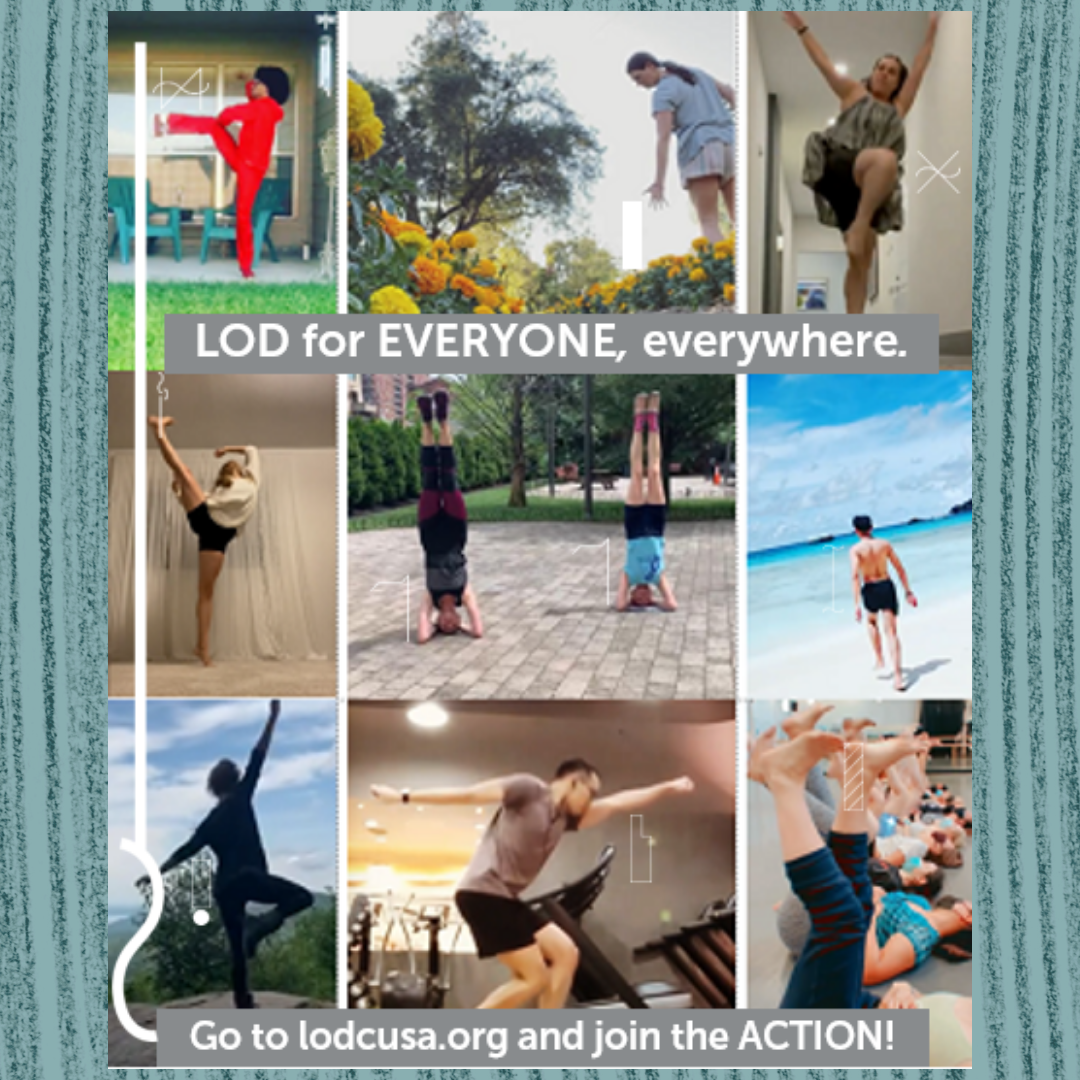
LOD is Here, There, and Everywhere!


Jacob's Pillow Podcast and Playlist honors our AHG: "A dance pioneer whose power was the pen."
Art for Humanity’s Sake opening, featuring choreography by our Executive Director Susan Gingrasso.

Hot off the LOD Fashion Path(run)way!
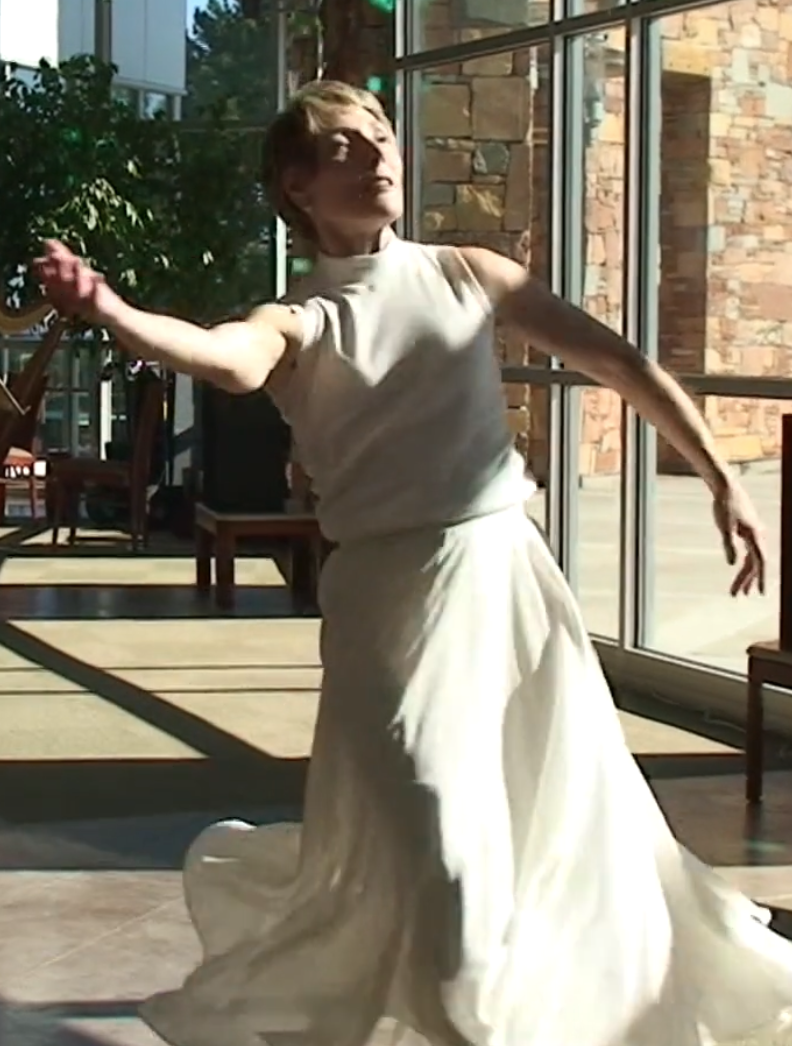
Susan Gingrasso selected for NDEO 2025 Lifetime Achievement Award Living Artist/Educator!
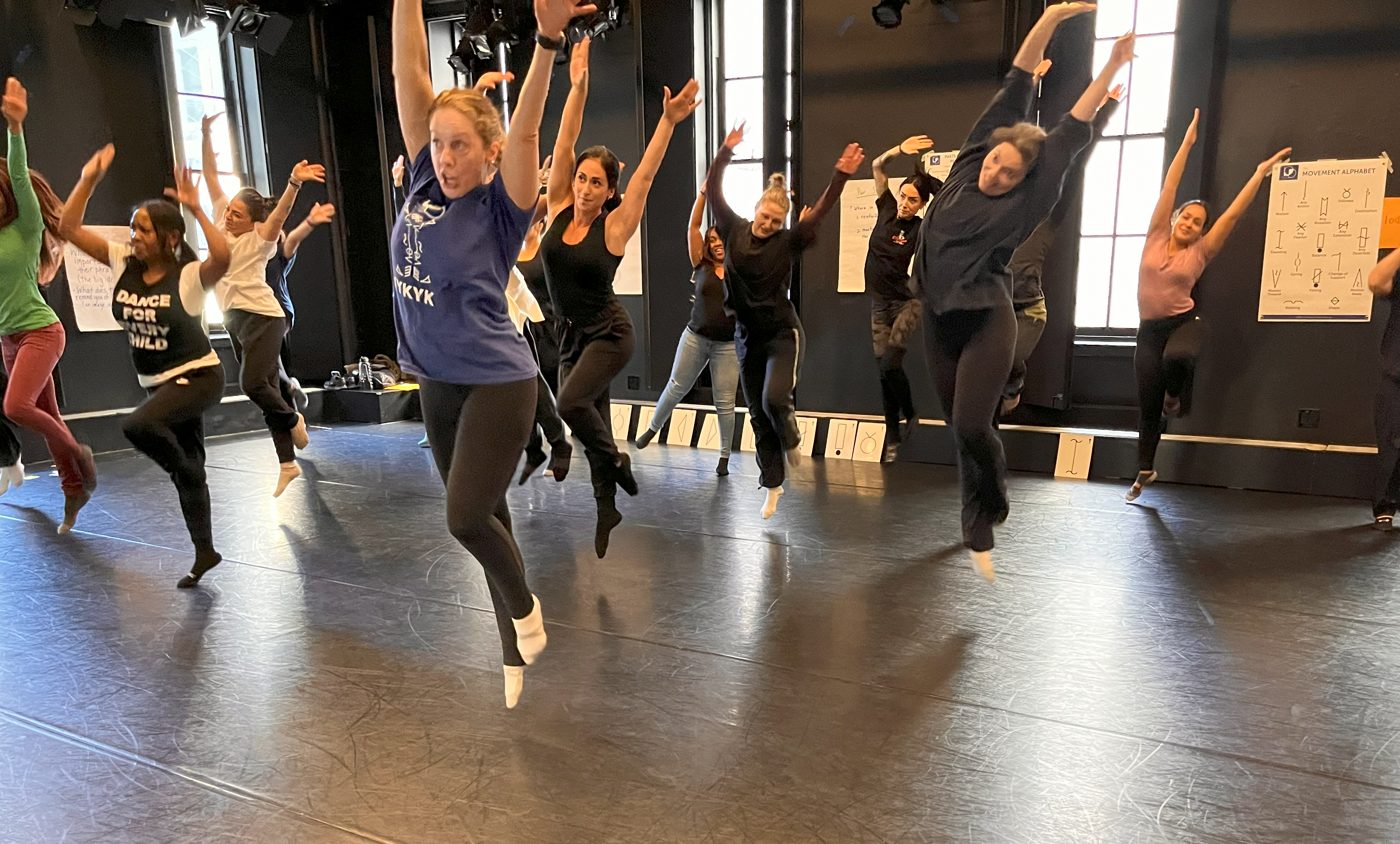
It is never too late or early to become one of our Fab LODC Members!
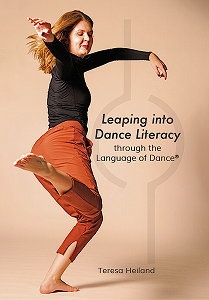
LOD Teacher Trainer Dr. Teresa Heiland's new pedagogy textbook, Leaping into Dance Literacy through the Language of Dance®, is building some exciting buzz.
People








Dr. Tina Curran
Kerry DiLeonardo
Susan Gingrasso
Dr. Teresa L. Heiland
Jimmyle Listenbee
Beth Megill
Michael Richter
Heidi Wiess



- Jack Anderson
- Bruce Marks
- Jill Beck
- Kevin McKenzie
- Shelley C. Berg
- Madeleine M. Nichols
- George Dorris
- Tamara Nijinsky
- Sali Ann Kriegsman
- Maria Pascher Tallchief
- Joan Kunsch
- Paul Taylor
- Yasuko Takunaga
LOD Benefits
Language of Dance helps to:
- Inspire and organize ideas for dance-making and composition
- Prepare improvisation and technique classes
- Teach technique and coach performers
- Notate choreography
- Research dance and conduct thorough movement analysis
- Connect with choreographers across the country and world
- Organize community dances and games to connect participants
- Develop creative, critical thinking, and problem solving skills
Dr. Ann Hutchinson Guest and
LODC Origins
The Language of Dance® Approach grew out of Dr. Ann Hutchinson Guest’s work with children at the New York City 92nd Street Y.M.H.A. in the 1950’s and later with adults in London’s Teacher Training College of the Royal Academy of Dance in the 1970’s.
Guest, the primary developer of Rudolf Laban’s (1879-1958) system of Kinetography, which she coined “Labanotation”, began to use the notation symbols in a freer, more exploratory way while teaching children at the 92nd Street Y. She discovered that the physical coordination and focus required by structured notation limited the children’s freedom to move and be creative. This experience inspired her to research and identify the prime actions universal to all movement forms.
After consulting many lists and sources including the “Seven Movements in Dance” as taught in the Cecchetti Classical Ballet Method, Laban’s list of basic actions, and the writings of Margaret H’Doubler, she codified her definition of the ABC’s of movement, the Movement Alphabet ©1983.
In England, the need for a freer use of the Labanotation symbols arose when Valerie Preston taught Laban’s Educational Dance to physical education teachers, one of whom suggested the name, Motif Writing. This led to Preston’s development of the usage and to the subsequent publication in 1967 of her books on the subject entitled Readers in Kinetography Laban, Series B, Motif Writing for Dance.
While teaching a course at the Teacher Training College of the Royal Academy of Dance in 1971, Guest returned to her exploratory and creative use of the motif symbols. She recognized the need for complex movements to be deconstructed to their most basic elements with the ability to be built back up again. During this time, she codified the Language of Dance® work and produced the textbook entitled Your Move - A New Approach to the Study of Movement and Dance published in 1983. The second edition (2007), co-authored by Dr. Tina Curran, co-Founder of the Language of Dance Center (USA), is Your Move: The Language of Dance® Approach to the Study of Movement and Dance, available from Taylor & Francis.
The establishment of the Language of Dance Centre in London (1967) and the Language of Dance® Center (USA) in Connecticut (1997) with Dr. Tina Curran and Heidi Wiess enabled Guest and others to raise the profile of this innovative and pioneering approach to teaching dance.
In 2022, Dr. Ann Hutchinson Guest was appointed an Official Member of the Most Excellent Order of the British Empire (MBE) in recognition of her services to dance.
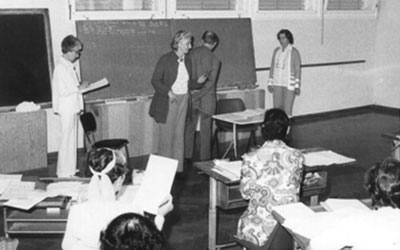
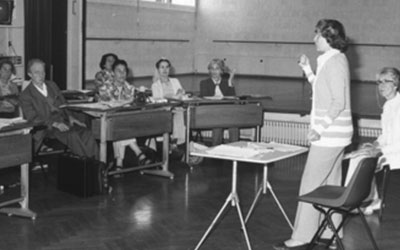
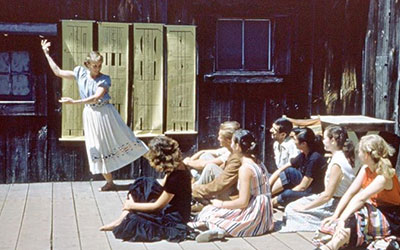
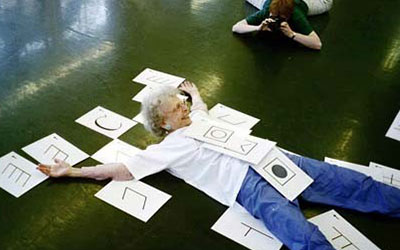
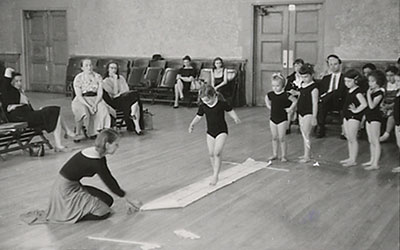
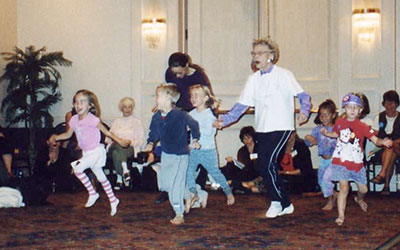






Special thanks to 92Y Dance Education Laboratory (DEL) for allowing us to use their photos that appear on our site.
Copyright © 2026 Language of Dance® Center. All Rights Reserved.